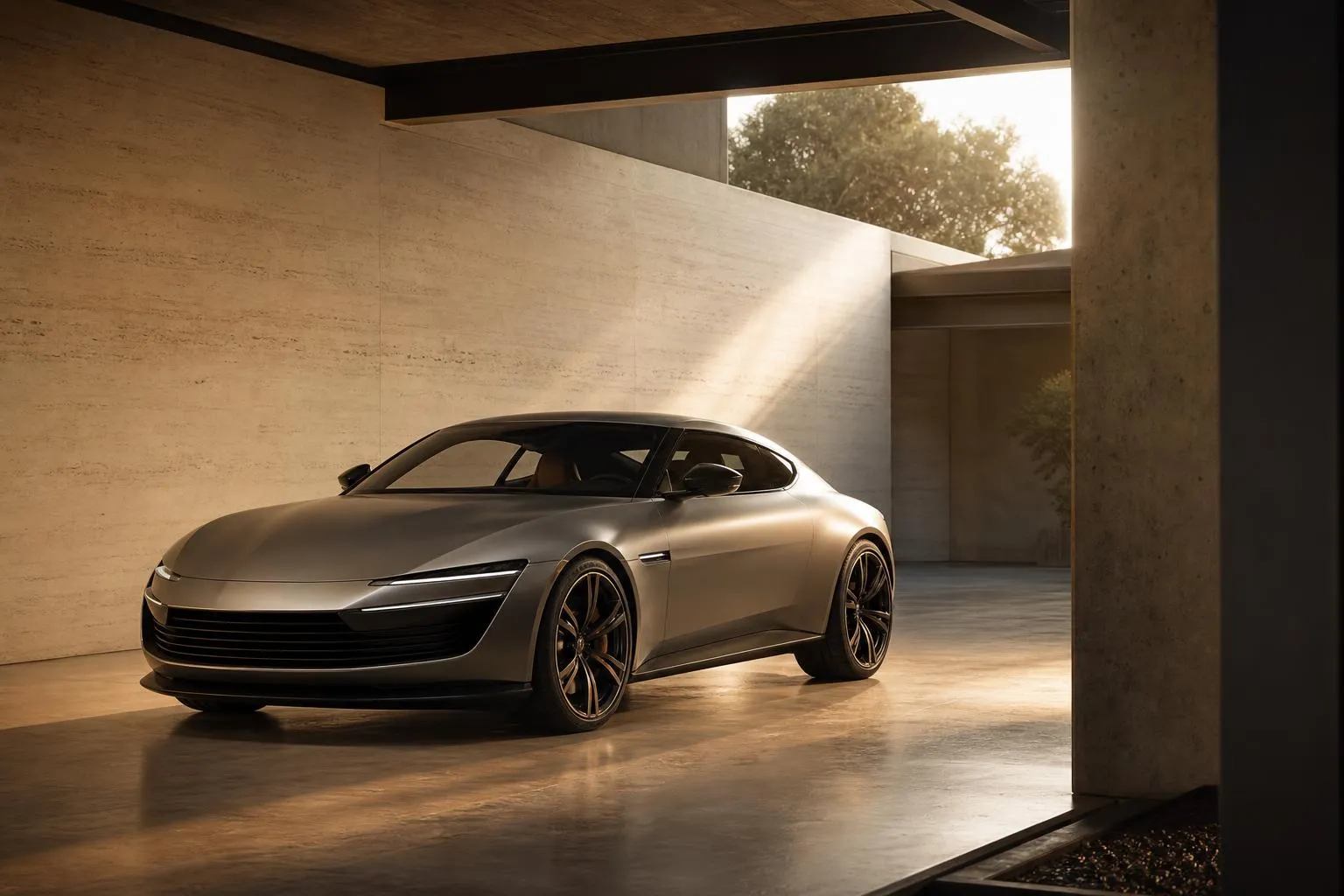
What Stealth Wealth Cars Actually Signal (And to Whom)
The best stealth wealth cars share a specific quality: they read as "successful professional" to the general public while signaling genuine taste and engineering knowledge to the people whose opinions actually matter to you. A $180,000 Porsche Panamera in Carrara White Metallic attracts less street-level attention than a $55,000 Dodge Challenger in Hellraisin Purple. That gap is the entire point.
Stanley and Danko documented this preference empirically in The Millionaire Next Door, finding that the majority of American millionaires drive domestic or modestly priced vehicles and actively avoid conspicuous consumption. Decades later, the underlying logic holds. What has changed is the sophistication of the options available and the financial case for choosing them deliberately.
This isn't about false modesty. It's about the philosophy of financial discretion applied to a $100,000+ purchase decision with real tax, insurance, depreciation, and security implications.
The Real Cost of Luxury Vehicle Ownership
Before picking a model, run the actual numbers. According to Edmunds' True Cost to Own data, five-year ownership costs for top-tier luxury sedans, including depreciation, insurance, maintenance, and fuel, frequently exceed $100,000. On a $120,000 purchase, that means the vehicle costs you roughly $20,000 per year before you factor in the opportunity cost of the capital.
Insurance alone is material. The Insurance Information Institute reports that annual premiums for luxury vehicles priced above $80,000 range from $3,000 to over $8,000 depending on model, driver profile, and coverage level. A BMW 7 Series and a Lexus LS may carry similar sticker prices but meaningfully different insurance profiles.
Depreciation is where the real wealth destruction happens. Kelley Blue Book data shows the Porsche Panamera retaining approximately 50 to 55 percent of its value after three years, versus the BMW 7 Series at roughly 38 to 42 percent. On a $120,000 purchase, that 13-point gap is approximately $15,600 in preserved capital. For a $5M+ net worth individual, that number is not trivial, but it is also not the primary decision variable. The tax treatment often is.
The Federal Reserve's Survey of Consumer Finances confirms that households in the top wealth decile allocate a smaller percentage of net worth to vehicle assets than middle-income households. Wealthy individuals treat vehicles as consumption, not investment. The goal is to optimize that consumption, not minimize it.
Stealth Wealth Cars: Total Cost of Ownership Comparison
The table below uses Edmunds True Cost to Own methodology across five years, incorporating depreciation, insurance, maintenance, fuel, and financing at current rates. Figures assume private ownership, 15,000 miles annually, and standard luxury coverage.
| Model | MSRP (Base) | 5-Year Depreciation | Annual Insurance Est. | 5-Year Maintenance Est. | 5-Year Total Cost |
|---|---|---|---|---|---|
| Porsche Panamera 4 | $92,200 | ~$38,000 | $5,500 | $12,000 | ~$98,000 |
| BMW 7 Series 740i | $97,100 | ~$52,000 | $5,200 | $14,500 | ~$112,000 |
| Mercedes-Benz S 500 | $114,900 | ~$58,000 | $5,800 | $13,000 | ~$122,000 |
| Lexus LS 500 | $82,900 | ~$40,000 | $4,200 | $9,500 | ~$96,000 |
| Genesis G90 | $89,800 | ~$44,000 | $3,800 | $8,500 | ~$94,000 |
Estimates based on Edmunds TCO methodology and Insurance Information Institute premium ranges. Individual costs vary by location, driving record, and trim selection.
The Lexus and Genesis columns reflect J.D. Power's Vehicle Dependability Study findings: Lexus and Porsche consistently rank among the top three most reliable luxury brands, which compresses maintenance costs meaningfully over a five-year hold.
Tax Treatment: Why the Sedan vs. SUV Decision Has a Real Dollar Answer
This is the section most luxury car journalism skips entirely, and it's the one most relevant to wealth management strategies for executives who own businesses or operate as self-employed individuals.
The IRS sets annual luxury auto depreciation limits for passenger vehicles used in business. According to IRS Publication 463, first-year limits for passenger automobiles placed in service in 2023 are capped at $12,200 without bonus depreciation. That cap applies regardless of purchase price, whether the car costs $60,000 or $200,000.
Heavy SUVs change the math substantially. Vehicles with a gross vehicle weight rating (GVWR) over 6,000 pounds qualify for up to $28,900 in Section 179 expensing in 2023, per IRS guidance on IRC Section 179 and 168(k). Several stealth wealth SUVs clear this threshold: the BMW X5, Mercedes GLE, Volvo XC90, and Porsche Cayenne all qualify.
The after-tax cost difference between a qualifying SUV and an equivalent sedan can reach $15,000 to $40,000 on a single purchase, depending on your marginal rate. At a 37 percent federal rate plus state taxes, the $16,700 additional first-year deduction on a qualifying SUV saves roughly $6,200 in federal tax alone, before state treatment.
| Vehicle Class | GVWR | Year-1 Depreciation Cap | Section 179 Eligible | Approx. Tax Savings (37% rate) |
|---|---|---|---|---|
| Luxury Sedan (e.g., BMW 7 Series) | Under 6,000 lbs | $12,200 | No | ~$4,500 |
| Heavy SUV (e.g., BMW X5) | Over 6,000 lbs | $28,900 | Yes | ~$10,700 |
| Heavy SUV with Bonus Depreciation | Over 6,000 lbs | Up to 60% of cost | Yes | Varies significantly |
Work with your tax attorney before structuring any vehicle purchase as a business expense. Personal use allocation, substantiation requirements, and state conformity rules all affect the actual outcome. But for a business owner choosing between a $100,000 sedan and a $100,000 SUV with equivalent stealth credentials, the tax code is a legitimate tiebreaker.
Which Luxury Cars Do Billionaires Actually Drive?
The documented answer is less glamorous than most people expect. Warren Buffett drove a Cadillac XTS for years before switching to a Cadillac CT6. Mark Zuckerberg has been photographed in a Volkswagen GTI and an Acura TSX. Bill Gates has owned a Porsche 959 and a Porsche 911, neither of which is a status-maximizing choice relative to his net worth.
The pattern is consistent with the stealth wealth philosophy: vehicles that reflect genuine enthusiasm or functional preference rather than wealth signaling. For most FATFIRE individuals, that translates to a short list of criteria.
The vehicle should be invisible to people who don't know cars. A Porsche Panamera reads as "nice car" to most observers. A Bentley Flying Spur reads as "very rich person." The Panamera delivers comparable interior quality, better driving dynamics, and superior residual value, while generating a fraction of the social friction.
The vehicle should reward the driver, not the audience. Stealth wealth cars earn their price in the seat: noise isolation, adaptive chassis systems, seat comfort on long drives, and the kind of effortless highway passing that comes from 400-plus horsepower managed by a well-calibrated transmission. None of that is visible from outside.
The vehicle should not create professional liability. Security consultants advising ultra-high-net-worth families increasingly recommend "gray man" vehicle strategies, choosing vehicles that blend into upper-middle-class traffic rather than signaling extreme wealth, as part of broader personal security protocols. For individuals with public profiles, nonprofit board seats, or significant employee headcount, a Rolls-Royce in the parking lot is a governance problem. A Lexus LS is not.
Stealth Wealth Sedans: The Best Options With Actual Specifications
Porsche Panamera 4 (2024) The strongest all-around case. A twin-turbocharged 2.9-liter V6 producing 330 horsepower reaches 60 mph in 4.8 seconds. The interior uses genuine open-pore wood, leather with visible stitching quality, and a 12.3-inch curved display that integrates cleanly rather than dominating the cabin. Residual value is the best in class among European luxury sedans per Kelley Blue Book. The exterior reads as a large, well-proportioned hatchback to most observers. Porsche has ranked first or second in J.D. Power's Vehicle Dependability Study for multiple consecutive years.
Lexus LS 500 (2024) The most financially conservative choice. A twin-turbocharged 3.5-liter V6 with 416 horsepower, 0 to 60 in 4.6 seconds, and a 10-speed automatic that is genuinely seamless. Lexus's semi-aniline leather, 28-way adjustable front seats, and standard Mark Levinson audio system deliver interior quality that competes directly with the S-Class. Maintenance costs run materially lower than German equivalents, and J.D. Power dependability rankings support that claim with data. The badge reads as "successful professional" in virtually any context.
Genesis G90 (2024) The contrarian pick. A 3.5-liter twin-turbo V6 producing 375 horsepower, standard rear-wheel drive with optional AWD, and an interior that uses Nappa leather, real wood, and a 27-inch curved display that rivals anything in the segment. Genesis offers a five-year, 60,000-mile bumper-to-bumper warranty and a three-year complimentary maintenance program. The badge generates zero social friction because most people cannot identify it. Starting around $89,800, it undercuts the S-Class by $25,000 while delivering comparable rear-seat comfort.
Mercedes-Benz S 500 (2024) The benchmark, with the benchmark's costs. The 3.0-liter inline-six with 429 horsepower and EQ Boost mild hybrid assistance reaches 60 mph in 4.4 seconds. The interior remains the reference point for ambient lighting, seat massage systems, and rear-seat legroom. The depreciation curve is steep, insurance premiums are at the high end of the luxury range, and the badge signals wealth clearly to anyone who recognizes it. Justified if the rear-seat experience is the primary use case, less so if you are the one driving.
BMW 7 Series 740i (2024) Strong technology execution with mixed financial characteristics. The 3.0-liter inline-six produces 375 horsepower, and the optional Executive Lounge rear seating competes with the S-Class for passenger comfort. The 5-year depreciation profile is weaker than Porsche or Lexus equivalents, and maintenance costs trend higher. The badge is widely recognized. For stealth purposes, the 5 Series long wheelbase version achieves 85 percent of the 7 Series interior quality at a lower price point and with less badge recognition.
Stealth Wealth SUVs: Elevated Comfort, Qualified Tax Advantage
The SUV category earns its place in this analysis partly on tax grounds and partly on practical ones. If you have children, travel with equipment, or operate in environments where a sedan reads as impractical, the following options deliver stealth credentials alongside the Section 179 qualification discussed above.
Volvo XC90 Recharge (2024) The most underrated option in the segment. The plug-in hybrid powertrain produces 455 horsepower combined, reaches 60 mph in 5.3 seconds, and qualifies for the federal EV tax credit under certain income and price thresholds. The interior uses open-pore wood, Swedish wool upholstery options, and a 9-inch portrait touchscreen that has aged better than most competitors. GVWR exceeds 6,000 pounds, qualifying for Section 179 treatment. The badge generates almost no social friction in any professional context.
BMW X5 xDrive40i (2024) The most versatile choice. The 3.0-liter inline-six produces 375 horsepower, and the X5's chassis delivers genuine driving engagement that the Volvo does not attempt to match. GVWR qualifies for Section 179. In non-M Sport trim with neutral paint, it reads as a competent family SUV. The M60i variant with 530 horsepower tips the balance toward performance visibility, which works against the stealth objective.
Porsche Cayenne (2024) The performance case. The base 3.0-liter V6 produces 348 horsepower, and the S variant's 2.9-liter twin-turbo reaches 434 horsepower with a 4.7-second 0 to 60 time. Residual values track Porsche's broader brand strength. In Platinum Silver or Mahogany Brown Metallic without the Sport Design package, it reads as a premium family SUV. GVWR qualifies for Section 179. The driving experience is the best in the non-performance SUV category.
Mercedes-Benz GLE 450 (2024) The S-Class technology filtered into an SUV. The 3.0-liter inline-six with EQ Boost produces 375 horsepower. The optional E-Active Body Control suspension, which leans into corners and pre-adjusts for road surface changes, is the most sophisticated chassis technology in the segment. GVWR qualifies for Section 179. Insurance premiums trend toward the higher end of the range per Insurance Information Institute data.
The CPO Strategy: Stealth Wealth Through the Used Market
This is where the Federal Reserve's Survey of Consumer Finances data becomes actionable. Wealthy households disproportionately favor value-optimized consumption. Buying certified pre-owned is not a compromise. For stealth wealth purposes, it is often the superior choice.
A two-to-three-year-old Lexus LS, Genesis G90, or Volvo S90 purchased CPO delivers near-identical interior quality and technology to a new equivalent. The original owner absorbed 20 to 30 percent first-year depreciation. You did not. The vehicle carries no "new car" signals, because it isn't one. The CPO warranty from Lexus (four years, 50,000 miles certified) or Genesis (five years, 60,000 miles certified) transfers meaningful risk back to the manufacturer.
The practical stealth benefit is real. A three-year-old Lexus LS 500 in Atomic Silver reads as a well-maintained professional vehicle. It does not read as a recent $83,000 purchase. That gap matters in contexts where managing wealth and lifestyle expectations requires calibration, whether that is a nonprofit board meeting, a client negotiation, or a school pickup line where you would prefer not to be the reference point for other parents' financial anxiety.
CPO pricing for a 2021 or 2022 Lexus LS 500 currently runs $55,000 to $65,000 in most markets. You are buying a vehicle that cost $83,000 new, has already absorbed its steepest depreciation, and carries factory-backed warranty coverage. The stealth credentials are equivalent to new. The financial case is better.
Stealth Wealth Scoring: How to Evaluate Any Vehicle
The following framework applies to any vehicle you are considering. Score each dimension from 1 (fails) to 5 (excellent) and weight by your personal priorities.
| Dimension | What to Evaluate | Weight Suggestion |
|---|---|---|
| Badge Recognition | How widely is the brand identified as expensive? | High |
| Exterior Distinctiveness | Does the design attract attention in neutral colors? | High |
| Performance Visibility | Does the car look fast or aggressive at rest? | Medium |
| Interior Quality | Does the interior justify the price without external signals? | High |
| Residual Value (3-Year) | What percentage of purchase price is retained? | Medium |
| Tax Classification | Does it qualify for Section 179 as a heavy SUV? | Medium (business owners) |
| Maintenance Cost Profile | J.D. Power ranking and brand service cost history | Medium |
| Security Profile | Does it attract attention in high-risk environments? | High (varies by individual) |
A Lexus LS scores well on badge recognition (low friction), residual value, maintenance cost, and interior quality. It scores lower on the Section 179 dimension because it does not qualify as a heavy SUV. A BMW X5 in non-M trim scores well across most dimensions and adds the tax advantage. The Porsche Panamera scores exceptionally on residual value and interior quality but carries moderate badge recognition costs in some professional contexts.
This framework connects to a broader approach to navigating wealth display carefully. The vehicle is one visible data point among many, and the goal is coherence across all of them, not optimization of any single one.
Maintaining the Stealth Profile: Practical Decisions That Matter
Choosing the right model is the first decision. The following choices determine whether it actually functions as a stealth vehicle.
Color. Neutral metallic finishes, Carrara White, Selenite Grey, Obsidian Black, and equivalent brand-specific names, read as professional. Bright colors, two-tone configurations, and matte wraps all increase visibility. The car you want to drive in five years is probably not the one you ordered in a moment of enthusiasm.
Trim and packages. Most manufacturers offer sport packages that add aggressive body kits, larger wheels, and visual differentiation. Skip them. The performance packages that matter, adaptive suspension, upgraded brakes, and enhanced powertrains, are available without the visual signaling. The M Sport package on a BMW adds exterior aggression that works against the stealth objective. The M Sport suspension without the body kit is available on some configurations.
Badging. Most manufacturers will omit or remove model-specific badges on request. Removing the "S 500" or "740i" designation from the trunk eliminates one of the few external signals that distinguishes a base model from a fully optioned one. The brand badge itself is sufficient for the people who recognize it.
Wheels. Factory 18-inch wheels in silver or dark finishes read as standard equipment. Upgraded 21-inch wheels in a distinctive finish read as an upgrade. The former is the stealth choice.
The same logic that governs understated luxury timepieces and a subtle approach to personal style applies here. The signal you are sending is competence and taste, not price. Those are not the same thing, and the distinction is legible to the people who matter.
Security Considerations for UHNW Vehicle Selection
This dimension rarely appears in automotive journalism and is directly relevant to the ultra-high net worth lifestyle.
Security consultants advising ultra-high-net-worth families increasingly recommend "gray man" vehicle strategies as part of broader personal security protocols. The objective is to choose vehicles that blend into upper-middle-class traffic rather than signaling extreme wealth. A Rolls-Royce Ghost is memorable. A Lexus LS is not. That distinction has operational value.
For individuals with public profiles, significant employee headcount, or family members who travel independently, the vehicle choice connects to a broader security posture. Vehicles that attract attention also attract memory. A gray Volvo XC90 driven by a billionaire is forgotten within seconds. A yellow Lamborghini Urus is not.
Practical implications include choosing vehicles without distinctive visual modifications, avoiding personalized plates that create a searchable identity, and considering whether your regular routes create predictable patterns that a distinctive vehicle would make easier to track. These are not paranoid considerations. They are standard recommendations from professional security consultants working with family offices and private wealth banking services that manage security as part of their service offering.
The vehicle choice also has an employee relations dimension. Arriving at a company event in a $350,000 vehicle when the workforce has not received raises creates a specific kind of friction. The stealth wealth vehicle eliminates that friction without requiring you to drive something that fails to meet your standards.
References
- IRS -- "Publication 463: Travel, Gift, and Car Expenses" (2024)
- IRS -- "Section 179 Deduction and Bonus Depreciation for Vehicles (IRC Section 179 and 168(k))" (2024)
- Kelley Blue Book / Cox Automotive -- "Annual Luxury Vehicle Depreciation and Residual Value Report" (2023)
- Edmunds -- "True Cost to Own: Luxury Sedan Segment Analysis" (2024)
- Federal Reserve -- "Survey of Consumer Finances" (2022)
- J.D. Power -- "U.S. Vehicle Dependability Study" (2024)
- Insurance Information Institute -- "Auto Insurance for High-Value Vehicles" (2023)
- Thomas J. Stanley and William D. Danko -- "The Millionaire Next Door: The Surprising Secrets of America's Wealthy" (1996)